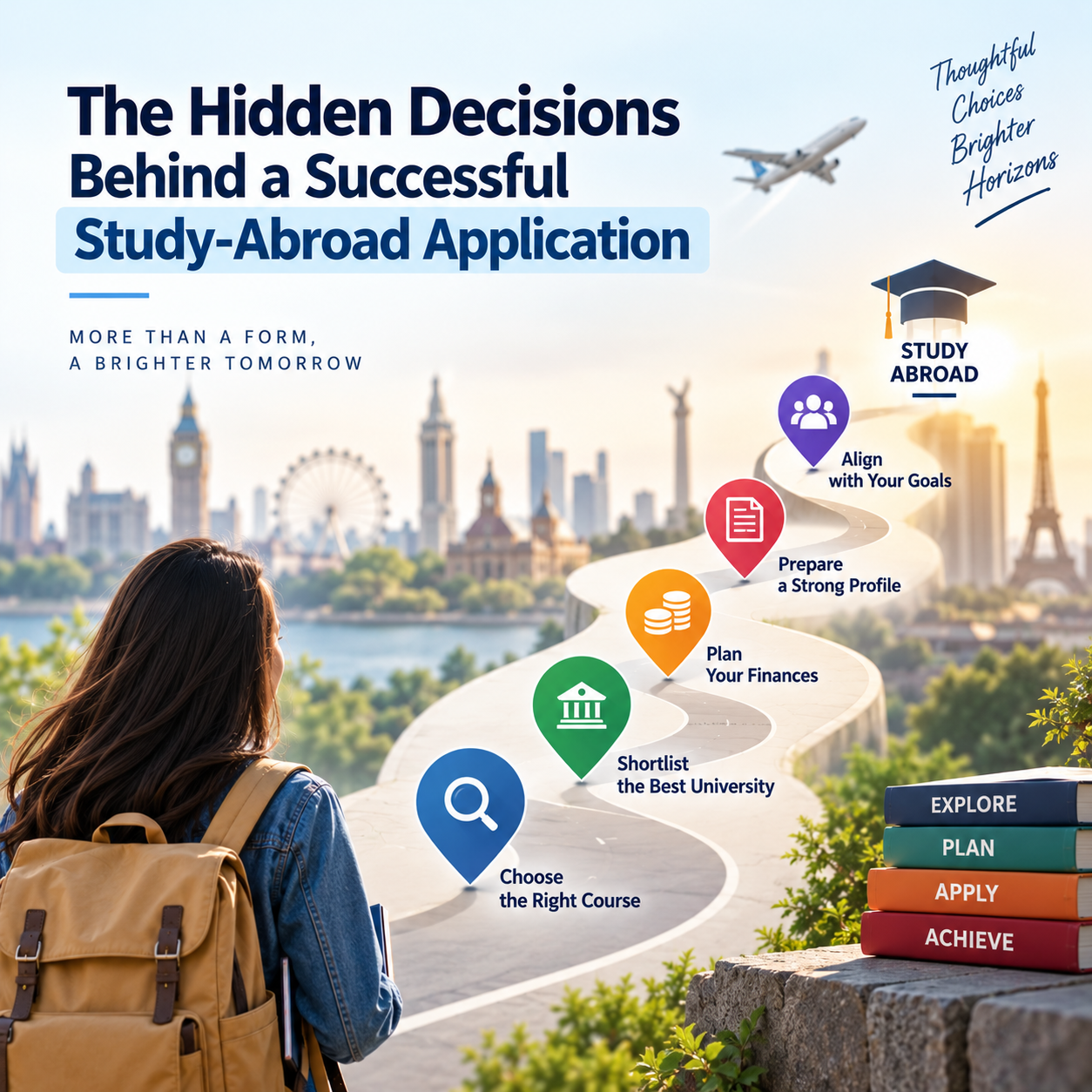
The Hidden Decisions Behind a Successful Study-Abroad Application
By seo_expert
August 27, 2026
A successful study-abroad application is rarely the result of one impressive document. Behind the final submission are many decisions: choosing a suitable course and destination, preparing finances, checking requirements, and making sure every detail tells the same story.
For students considering Overseas Education Consultants in Sangrur, understanding these decisions can make preparation more focused. It is about presenting genuine plans clearly and supporting important information with appropriate documents.
The Course Choice Comes First
An important decision is choosing a course that fits your academic and professional background. A program should not be selected simply because it is popular or because someone else recommends it.
Look at your previous education, subjects studied, skills, work experience, and future interests. Then consider whether the proposed course adds logical value.
A field change may require a clear explanation. If your new program is different from your previous studies, explain what influenced the change and how the new qualification supports your future plans.
A clear academic connection makes your decision easier to explain.
The Destination Should Have a Reason
Choosing a country is another decision that should be based on more than popularity. Think about the education system, course structure, language environment, career relevance, living arrangements, and visa requirements.
Different destinations have different student visa rules. For example, UK Student visa applicants generally need an offer from a licensed student sponsor and must meet financial and English-language requirements. Canada requires a letter of acceptance from a designated learning institution for a study permit, along with other documents applicable to the applicant.
Choose the destination after understanding its requirements.
Research the Education Provider
The institution you choose can influence the overall strength of your study plan. Research the course content, entry requirements, academic structure, location, facilities, and opportunities relevant to your field.
Read official course information and understand what you will actually study.
Your application should demonstrate that you know why the particular institution and course fit your plans. For UK applicants, the education provider must be a licensed student sponsor, and the applicant needs the relevant Confirmation of Acceptance for Studies before applying.
Plan Your Finances Early
Financial preparation is one of the decisions that should never be left until the final stage. Students need to understand tuition, living expenses, travel, accommodation, and other expected costs.
The issue is not simply showing a bank balance. You should be able to explain where the funds come from and ensure that financial documents are genuine, consistent, and suitable for the applicable requirements.
Australia’s student visa evidence framework, for example, can require evidence covering travel, living costs, tuition, and relevant family expenses.
Early planning gives you time to identify missing documents and resolve inconsistencies.
Language Preparation Is More Than a Test Score
English-language preparation can influence both admission and visa planning. The exact requirement depends on the destination, institution, course, and visa category.
Instead of waiting until an application deadline approaches, identify the required test and target score early. Give yourself time to improve weaker skills and retake the examination if necessary.
For UK Student visas, applicants may need to prove their English ability, with requirements depending on the course and circumstances.
Language preparation therefore supports both academic readiness and application planning.
Your Academic Timeline Should Be Clear
Review your education history carefully. Note the dates of school, college, university, employment, internships, and other relevant activities.
Gaps do not automatically make an application weak, but unexplained periods can create questions. If there was a genuine reason for a gap, prepare appropriate evidence and a straightforward explanation.
Check that the dates on application forms match your certificates, transcripts, employment records, and other supporting documents.
Consistency makes an application easier to understand.
Employment Experience Can Strengthen the Story
Previous employment can provide useful context for your chosen course, particularly when the proposed program develops skills connected to your professional experience.
However, employment information must be accurate. Job titles, employment periods, responsibilities, and supporting records should not contradict one another.
If your proposed course represents a career change, explain the decision honestly. A clear reason supported by your background is more useful than exaggerated claims about future success.
Some student visa systems specifically consider current circumstances and employment history. Australia’s Genuine Student assessment, for example, asks applicants about their current circumstances and allows supporting evidence such as employment records and a résumé.
Every Document Has a Role
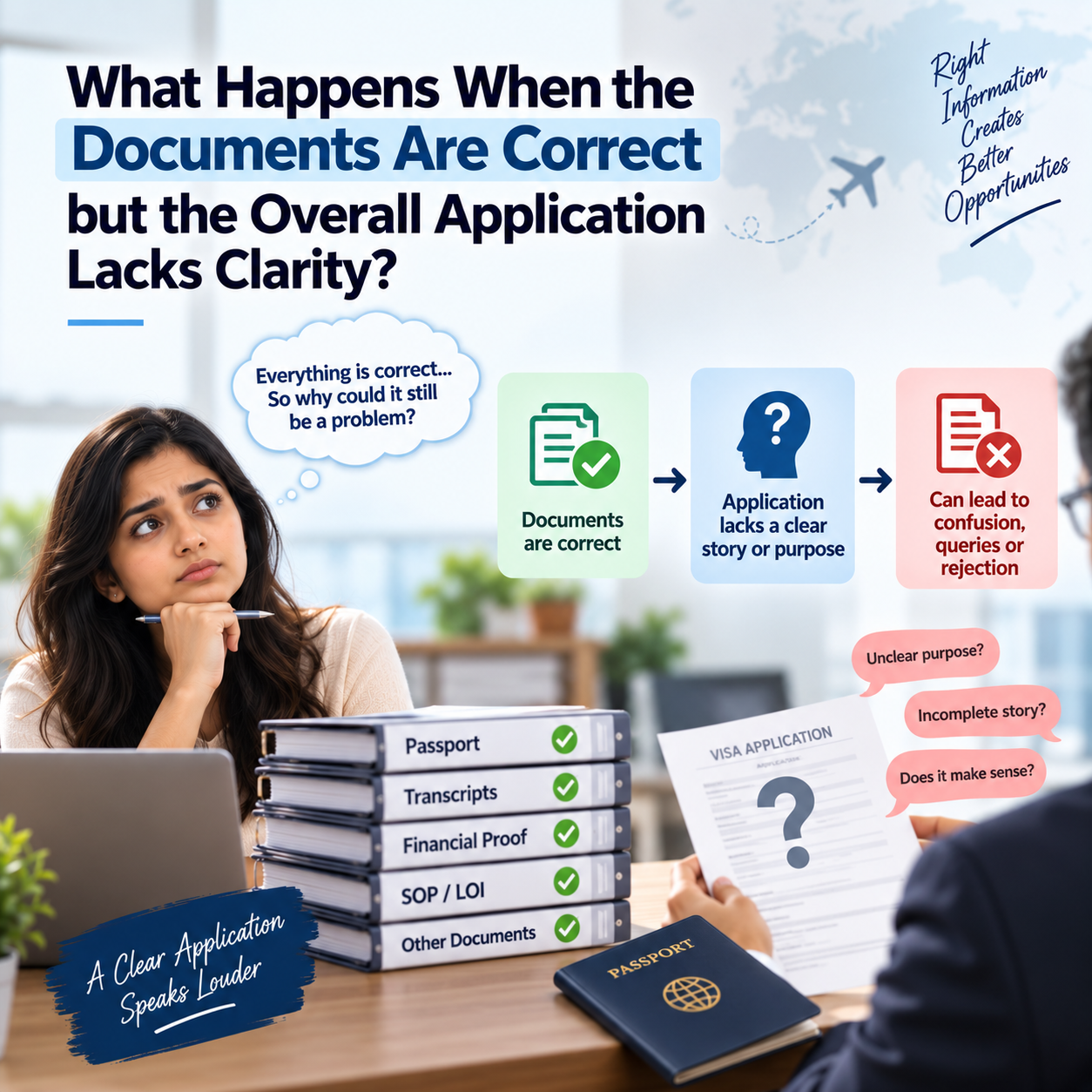
A study-abroad application should not contain documents simply because someone says that more paperwork looks stronger. Each document should have a purpose.
Academic records establish educational history. Language results demonstrate relevant ability. Financial records support the funding plan. Identity documents establish personal information. Admission documents confirm the proposed study.
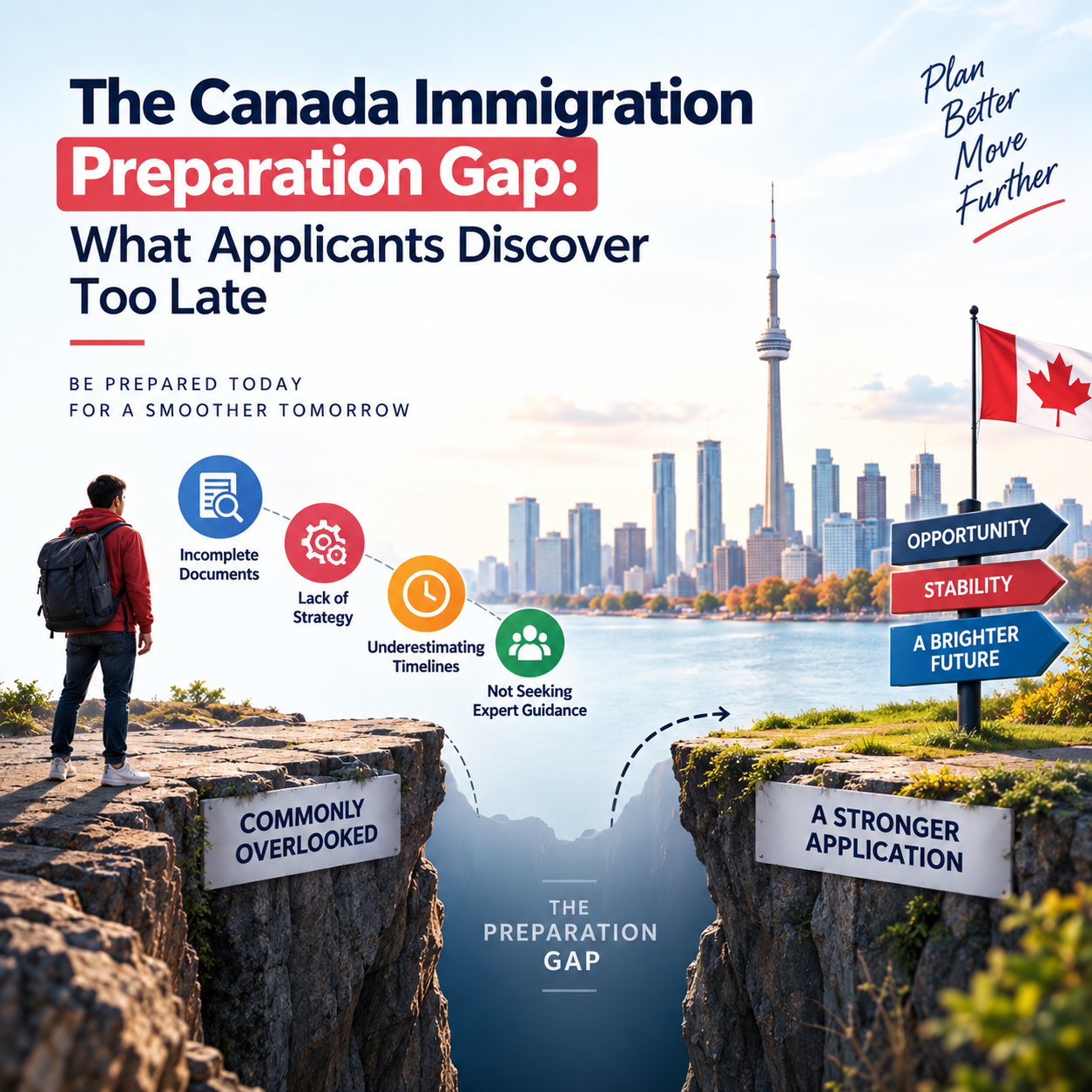
For Canada, official guidance states that applicants should submit the required documents as part of a complete study permit application, and missing documents can cause delays.
Organise documents logically and check that each one supports the information provided elsewhere.
Your Written Explanation Should Sound Like You
Personal statements, study plans, or visa responses should be based on your genuine circumstances.
Avoid copying paragraphs from websites or another person’s application. A statement can be grammatically perfect and still fail to explain why the chosen course makes sense for you.
Write about your actual academic background, interests, career direction, and reasons for choosing the destination. Then review the statement to ensure that every major claim can be supported.
The goal is clarity, not impressive vocabulary.
Check the Application From an Outsider’s View
Before submission, read the complete application as though you know nothing about the applicant.
Ask simple questions. Why this course? Why this institution? Why this country? How does the course connect with previous studies? How will education be funded? What are the applicant’s realistic goals?
If an answer is unclear, investigate it before submitting.
This review can reveal gaps that are easy to miss when documents are prepared separately.
Keep Up With Current Requirements
Study-abroad rules can change. Application procedures, document requirements, financial evidence, language rules, and visa conditions may be updated.
Students should therefore check current official information instead of relying entirely on older checklists, social media posts, or advice based on another applicant’s experience.
A requirement that applied to a previous applicant may not apply to you. The correct checklist depends on the destination, visa category, course, institution, and personal circumstances.
Conclusion
A successful study-abroad application is built through decisions that may not be obvious when looking at the final file. The course, destination, institution, finances, language preparation, academic history, employment experience, and supporting documents all need to fit together.
If you are researching Overseas Education Consultants in Sangrur, remember that preparation should begin before the application form is opened. Start by understanding your goals, comparing suitable study options, checking current requirements, preparing documents, and reviewing the consistency of your information.
Do not try to create a perfect story. Create a truthful and understandable one. When your academic background supports your course choice, your finances support your study plan, and your documents support your statements, the application becomes easier to understand.
The hidden decisions are often the ones that make the visible application stronger. Careful preparation does not guarantee an outcome, but it can help you avoid preventable mistakes and approach your study-abroad plans with greater confidence.