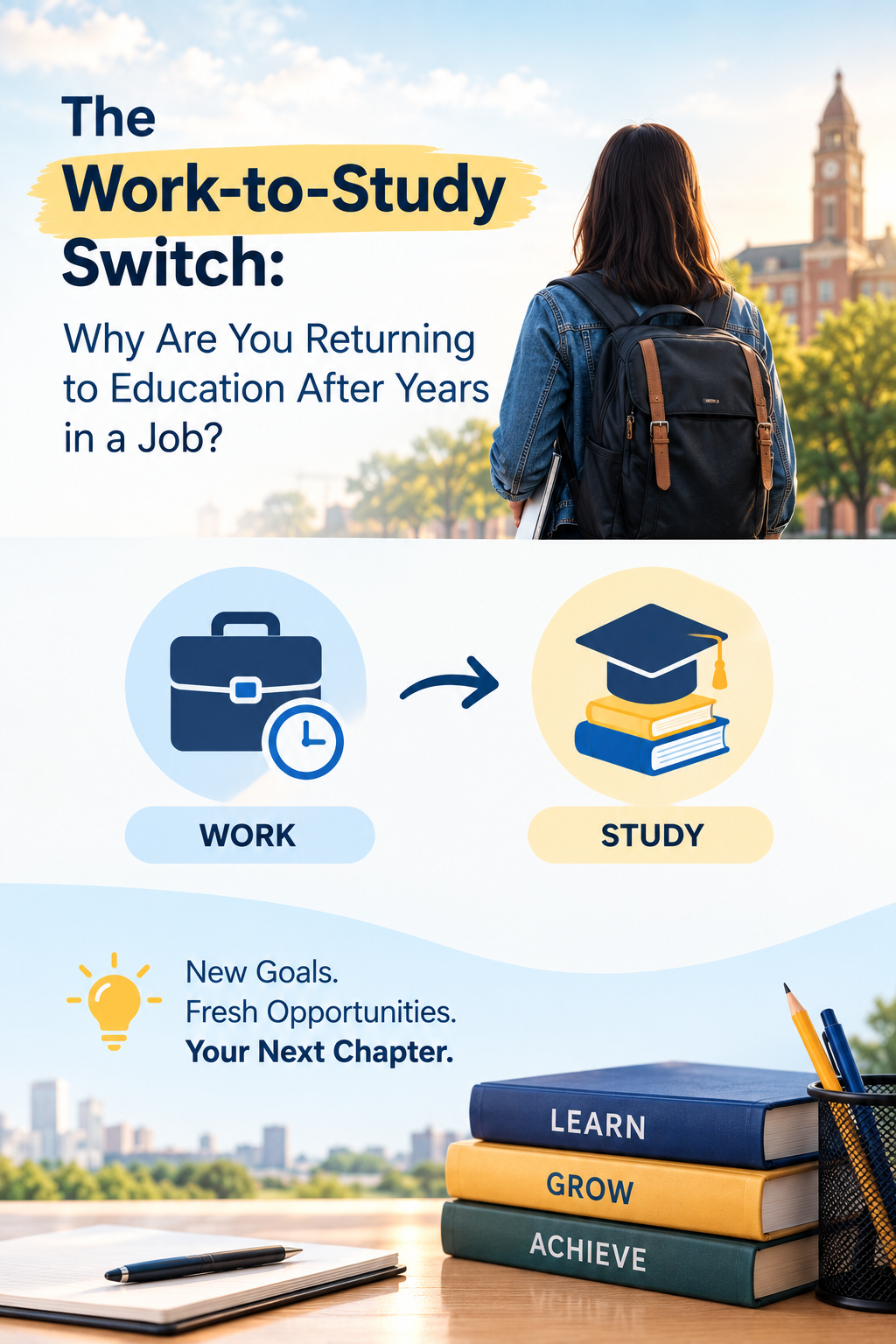
The Work-to-Study Switch: Why Are You Returning to Education After Years in a Job?
By seo_expert
September 29, 2026
Returning to education after years of employment can feel like a major change. A person may have built professional experience before deciding to study again. The decision can be driven by a desire to develop skills, change roles, or respond to industry changes. For applicants researching Study Visa Consultants in Nabha, the question is whether their education plan makes sense alongside their previous work and future goals.
Why Return to Education After Working?
There is no single reason why an experienced professional may return to education. Some workers discover that their existing qualification limits progression. Others develop new interests after gaining practical exposure at work.
Employment can reveal skills gaps that were not obvious when formal education was completed. A professional may realize that technical knowledge, leadership training, or specialized qualifications could support a new direction. The explanation should be genuine and connected to a real professional objective.
Connect Work Experience With the New Program
One important part of a work-to-study transition is the connection between previous employment and the proposed program. The connection does not have to be identical, but it should be reasonable.
For example, someone working in sales may develop an interest in business analytics after reviewing customer data and performance reports. A person working in administration may decide to study project management after coordinating teams and deadlines. A technical employee might pursue management education after taking on supervisory responsibilities.
When preparing a study plan for visa application, describe what you learned through employment and explain how the proposed program addresses the next stage of your development.
Why Now?
Applicants who have spent several years working may need to explain why they are returning to education at this point. The answer should focus on actual circumstances rather than general statements.
Perhaps your responsibilities have increased and you now need specialized knowledge. Maybe your industry has changed and new skills have become important. You may have discovered an interest in another field through workplace experience. You may also have reached a career stage where formal education can support a planned transition.
The timing should make sense when compared with your employment history.
Avoid Making the Change Look Random
A sudden change from a long-established career to an unrelated course can require more explanation. A career change can be legitimate; the key is explaining what led to it.
Start with your previous experience. Identify the skills you already possess, the limitations you encountered, and the new abilities you want to develop. Then explain how the proposed program fits into that progression.
Understand the subjects, learning outcomes, entry requirements, and academic workload before committing.
Build a Clear Education and Employment Timeline
Create a timeline before preparing the application. Include education, employment periods, promotions, career changes, training, and significant gaps.
This can help identify inconsistencies before submission. For instance, an employment letter may show different dates from a résumé, or an application form may accidentally omit a period of employment.
A study visa application checklist should therefore include academic and professional records. Depending on the destination and application type, supporting documents can include an acceptance letter, passport, academic records, employment evidence, financial documents, and other required paperwork.
Official Canadian guidance, for example, lists an acceptance letter from a designated learning institution and proof of financial support among study-permit requirements. Requirements vary by country and circumstances, so applicants should check current official instructions.
Show That the Program Has a Purpose
A study plan should answer a basic question: why this program?
Avoid relying only on statements such as “I want international exposure” or “I want better opportunities.” Explain the specific knowledge or skills you expect to gain.
If your previous employment involved operations and the new program focuses on supply-chain management, explain the connection. If you worked with customers and want to study digital marketing, identify the experience that led to the interest.
The purpose should be understandable without exaggeration and should support the career direction you describe.
Consider the Financial Side
Returning to education also requires financial planning. Applicants should understand tuition, living costs, transportation, and other expenses.
For Canada, official guidance requires applicants to demonstrate sufficient funds for tuition, living expenses, and transportation, with evidence supporting the availability and source of those funds.
Your financial documents should provide a clear and consistent picture of your finances. If savings have accumulated through employment, supporting records should reasonably explain the funds. If another person provides financial support, the required evidence should clearly establish that arrangement.
Do Not Hide the Employment Gap
An applicant may worry that years away from education will automatically weaken a study application. A work history is not the same as an unexplained gap. Employment demonstrates what you were doing during that period.
Keep relevant employment records and explain career progression accurately. If there were periods without employment, describe them honestly where an explanation is required.
The objective is to make the timeline understandable and consistent.
Prepare for Questions About Your Decision
Before submitting your application, ask yourself:
Why did I choose to study now?
What did my previous job teach me?
What skills do I need to develop?
Why did I choose this particular program?
How is it connected to my past experience?
What professional direction do I expect after completing it?
These questions can identify weak points. You do not need memorized answers; you need to understand your reasoning.
Keep Every Document Consistent
Your application should present a clear timeline. Check names, dates, job titles, qualifications, and employment periods across forms and supporting documents.
If information differs, determine whether the difference has a legitimate explanation and provide clarification where appropriate. Do not alter facts simply to create a smoother story.
For Canada, study-permit applicants must meet requirements that include enrollment at a designated learning institution, sufficient financial resources, and satisfying an officer that they will leave Canada when their permit expires, among other conditions.
Stay Personally Involved
If you receive help preparing an application, remain involved. Read the completed forms, understand the information being submitted, check important dates, and keep copies of your documents.
People searching for Study Visa Consultants in Nabha should remember that application assistance does not remove the need for personal preparation. You should be able to explain your education history, work experience, selected program, financial plan, and future objectives in your own words.
Final Thoughts
The work-to-study switch does not have to be difficult to explain. A professional who returns to education after years in a job can present a clear progression when past experience, present study choice, and future objectives are connected logically.
For anyone researching Study Visa Consultants in Nabha, preparation begins with understanding the reason behind the educational change. Review your employment history, identify the skills you want to develop, choose a program with a genuine purpose, organize your study visa application checklist, and prepare a clear study plan for visa application.
The goal is not to create a perfect story. It is to present your real story accurately and consistently, with a clear educational purpose. When your documents and explanation support the same timeline, your decision to return to education becomes easier to understand.