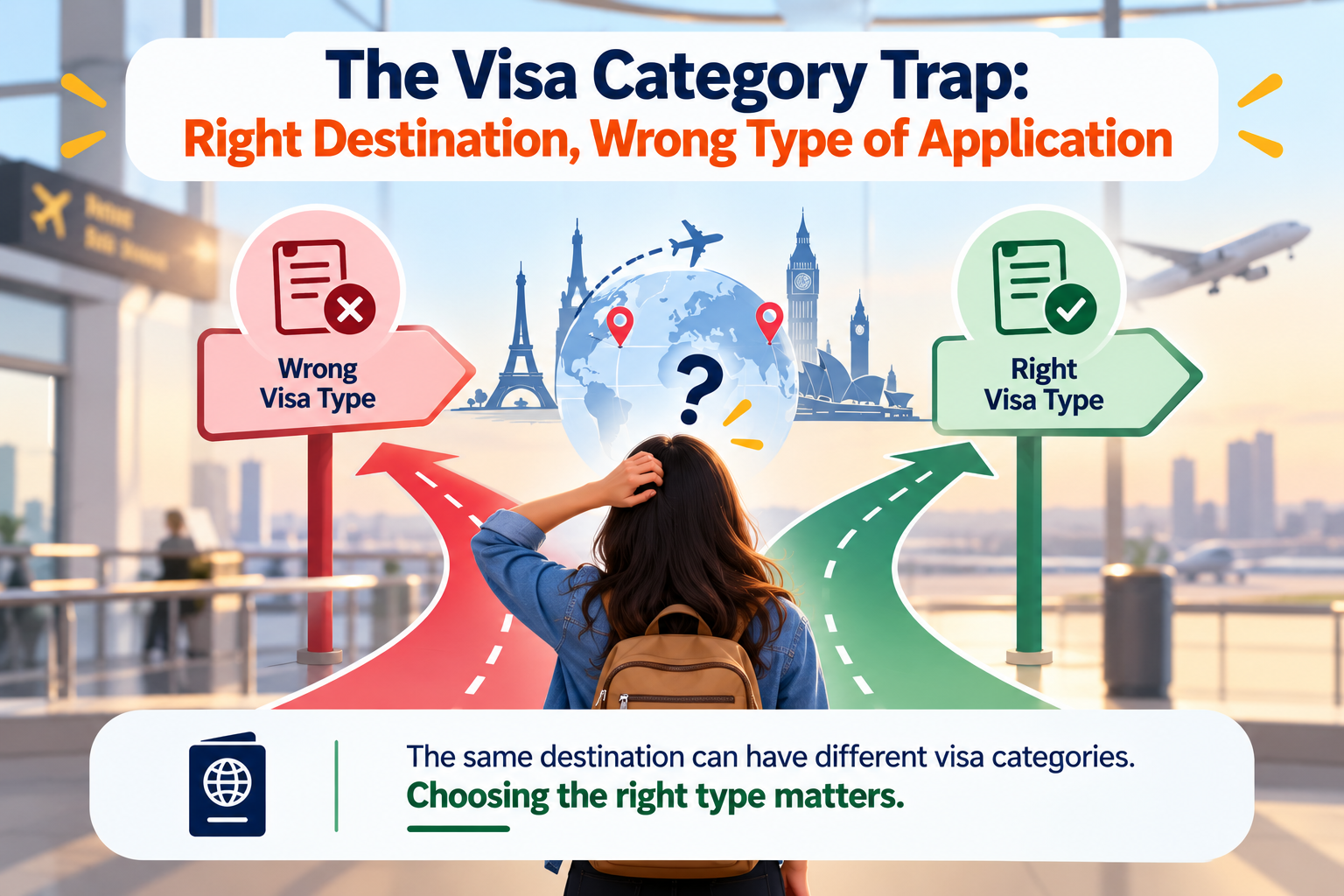
The Visa Category Trap: Right Destination, Wrong Type of Application
By seo_expert
September 29, 2026
Choosing the right country is only one part of a successful visa journey. A more subtle problem can arise when an applicant identifies the correct destination but selects a visa category that does not match the real purpose of travel. This is the visa category trap: the destination may be suitable, the documents may look complete, yet the application can still face questions because the selected route does not fit the applicant’s circumstances.
For people searching for Visa Consultants in Nabha, understanding this issue before submitting an application can make the process more organized. Visa rules differ by destination, purpose, duration, nationality, and personal circumstances. Official guidance also makes clear that applicants need to select the appropriate application route before proceeding. UK guidance, for example, separates routes for visiting, studying, working, and joining family, while Canadian systems distinguish visitor, study, work, transit, and other categories.
Why the Visa Category Matters
A visa category is not simply a label on a form. It establishes the reason for the journey and determines which requirements, evidence, conditions, and restrictions apply. A person travelling for a short holiday may need a visitor route, while someone accepted by an educational institution may need a study route. An employee taking up an eligible overseas position may require a work-related route.
For this reason, choosing a visa type should happen after clarifying the actual purpose of travel, not before. Understanding visa category requirements early can help prevent an applicant from preparing documents for a route that does not actually match the intended journey.
Common Category Mistakes
One common mistake is treating all temporary travel as a visitor application. Visiting family, attending a business activity, studying, undertaking permitted work, and transiting through a country can have different rules. Canada, for example, provides separate application options for visitor visas, super visas, and transit visas. Its visitor visa form specifically asks applicants to select the type of visa they are applying for.
A third problem occurs when applicants focus on the destination first and the purpose second. Saying “I want to move to this country” is not enough. The more important question is, “What will I actually do there?” The second question usually determines which category needs to be examined.
Purpose Should Lead the Application
A useful starting point is to write down the intended activities in simple language. Are you travelling for tourism? Visiting relatives? Attending an event? Studying? Working? Joining a spouse or family member? Passing through the country on the way somewhere else?
Official UK guidance states that visa options can depend on the reason for travel, how long the applicant intends to stay, nationality, and personal circumstances. Applicants are also directed to check which visa they need before preparing and submitting the application. This illustrates why a destination alone cannot determine the correct route.
The basic visa application process should therefore begin with identifying the genuine purpose of travel. Once the purpose is clear, applicants can review the appropriate category and determine whether they meet its requirements.
Documents Must Tell the Same Story
Once the category is identified, supporting evidence should consistently reflect it. An application should not appear to have been assembled from unrelated documents.
If the stated purpose is tourism, the travel plan, employment circumstances, and other evidence should reasonably support a temporary visit. If the purpose is study, documents should support the educational reason and requirements of that route. If the purpose is employment, evidence should correspond to the relevant work arrangement and eligibility requirements.
The important point is consistency. The information in the form should agree with the supporting evidence and the circumstances described by the applicant. When documents tell a different story from the selected category, the application may require additional explanation.
How to Compare Possible Categories
When two categories seem relevant, compare them using the actual activity rather than the name of the route. Look at what the applicant is permitted to do, the expected duration, eligibility conditions, required evidence, and whether family members can accompany the applicant. This comparison can reveal important differences that are easy to miss when relying on general descriptions.
It is also useful to separate the visa document from the permission connected with the stay. In some immigration systems, a visa may allow travel to a country while another permission determines whether the person can study or work after arrival. The terminology and process differ by destination, so applicants should follow official instructions for the specific country and route. Applicants should verify the latest rules rather than relying on assumptions or old advice.
The Risk of Choosing the “Easier” Route
Some applicants are tempted to select a category that appears to have fewer requirements. That approach can create a bigger problem if the selected route does not match the actual purpose.
Immigration authorities assess applications according to the requirements of the relevant route. UK guidance, for instance, requires applicants to choose the correct application form and meet requirements specific to that route. Canadian guidance similarly provides different forms and instructions according to what the applicant intends to do.
Accuracy should therefore be more important than perceived convenience. An application should explain the genuine purpose rather than trying to fit the circumstances into a preferred category. Learning how to choose the right visa is about matching the real circumstances with the correct official route.
A Practical Pre-Submission Check
Before submitting, applicants can ask five simple questions:
- What is the exact purpose of my trip?
- Does the selected category officially cover that purpose?
- Does my intended length of stay fit the route?
- Do my documents support the stated purpose?
- Have my answers remained consistent throughout the application?
These questions provide a simple final check before completing the visa application process. Applicants should also confirm that the forms, document requirements, and eligibility information they are using are current.
When Professional Guidance Can Help
People considering Visa Consultants in Nabha may find guidance useful when their situation involves multiple purposes, previous refusals, complicated travel history, dependants, changes in employment or education, or uncertainty between two categories. The value of professional assistance should be in helping the applicant understand the applicable route and organize accurate information, not in promising approval.
Applicants should remain involved in their own applications. They should read the forms before submission, verify personal information, understand what is being declared, and keep copies of submitted documents. Canadian government guidance also warns that no representative can guarantee visa approval and that applicants remain responsible for truthful information.
Avoiding the Trap Before It Starts
The safest approach is simple: start with purpose, identify the relevant category, read the official requirements, prepare matching evidence, and then complete the application. Do not begin with the assumption that a particular visa is easier or more likely to work.
For anyone looking for Visa Consultants in Nabha, the key lesson is that visa planning is not just about selecting a destination. It is about matching the destination, purpose, category, eligibility, and evidence into one consistent application. A carefully chosen category can help prevent avoidable confusion, while an unsuitable category can create questions even when the applicant genuinely intends to travel.
Conclusion
The visa category trap often begins with a reasonable goal: reaching the right destination. The mistake happens when the application route is selected without first defining the exact purpose of travel. Understanding the distinction between visitor, study, work, transit, family, and other routes can help applicants approach the process with greater clarity.
A strong application is not simply a collection of documents. It is a consistent explanation of why the applicant is travelling, what they intend to do, how long they plan to stay, and why they meet the requirements of the selected category. Checking current official guidance and choosing the route that genuinely matches the circumstances should therefore be an essential step before submission.