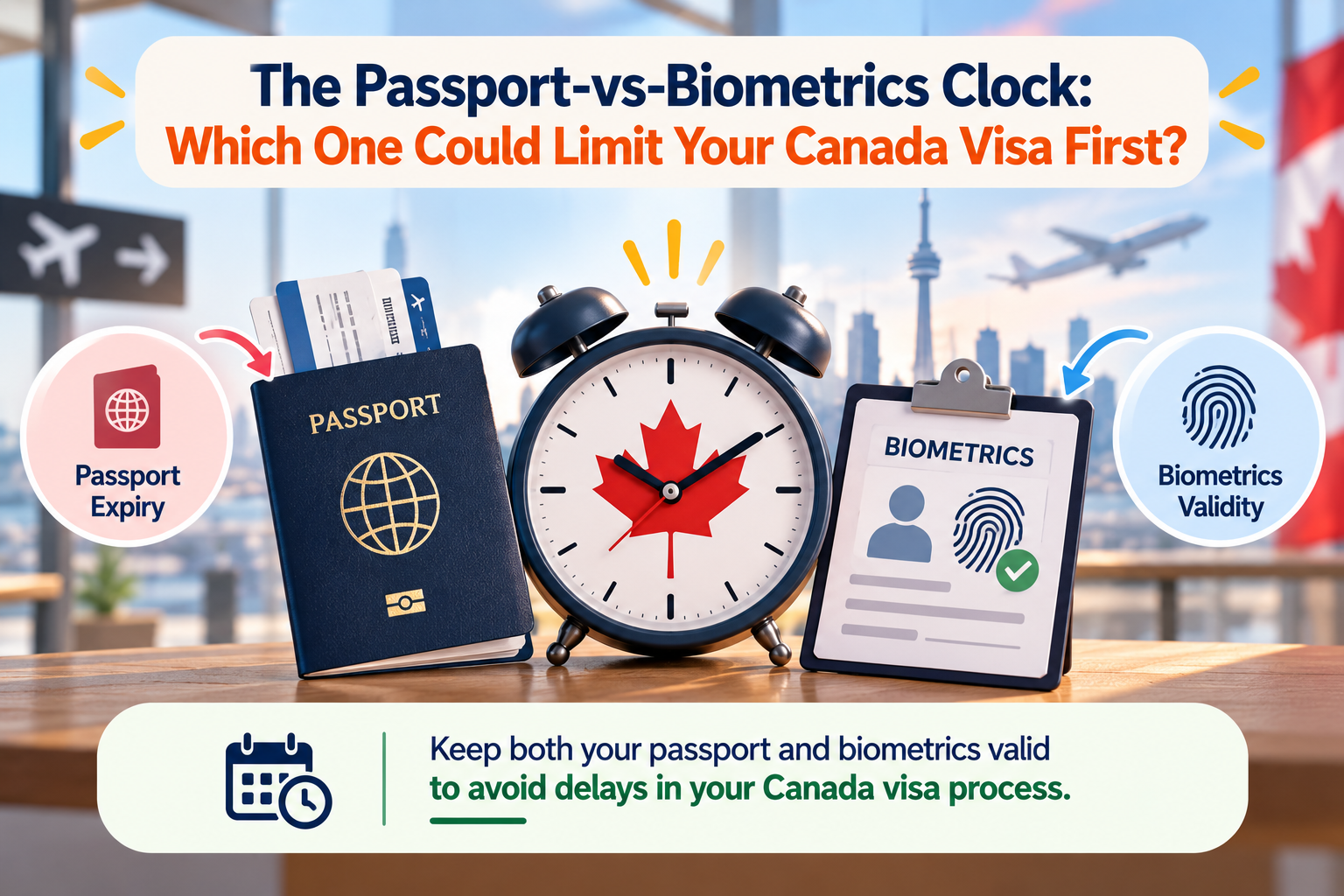
The Passport-vs-Biometrics Clock: Which One Could Limit Your Canada Visa First?
By seo_expert
September 29, 2026
A Canada visa application involves more than forms and supporting documents. Two dates can become especially important when considering the validity of a temporary resident visa: the expiry date of the passport and the expiry date of biometrics. These are separate timelines, and either one can become the earlier limit.
For people researching Canada Visa Consultant In Nabha, understanding these two clocks can make visa planning clearer. Canadian immigration guidance states that temporary-residence biometrics are generally valid for 10 years. It also states that a visa or permit cannot be issued beyond the expiry of the passport or the validity period of biometrics. For visitor visas, validity can generally be up to 10 years, subject to these limits and the officer’s decision.
Why Passport Validity Matters
A passport is the travel document connected to your identity and international travel. When a Canadian visa is issued, its validity cannot extend beyond the passport expiry date. Therefore, an applicant with a passport nearing expiry may not receive the longest possible visa validity.
Imagine an applicant whose passport expires in two years while biometrics remain valid for several more years. The passport date can become the earlier boundary. The visa cannot simply continue beyond the passport’s expiry.
This is why passport validity should be checked before preparing an application. Applicants should know exactly when the current passport expires and consider whether renewal is appropriate before applying. The right timing depends on the individual circumstances and application route.
What Is the Biometrics Clock?
Biometrics generally means fingerprints and a photograph collected for identity verification. For temporary residence applications, Canadian guidance says biometrics are valid for 10 years. If you provided biometrics within the previous 10 years, they can generally be reused for another visitor visa, study permit, or work permit application, subject to the applicable rules.
There is an important limitation. A visa or permit cannot be issued beyond the expiry date of valid biometrics. Therefore, an applicant with an older biometric record should check its expiry date instead of assuming that the passport is the only important timeline.
Canadian immigration provides a biometric status-check option so applicants can confirm whether their biometrics are still valid and when they expire.
Which Clock Could Limit the Visa First?
The practical answer is whichever relevant date arrives first.
Suppose your passport is valid for eight years but your biometrics expire in two years. The biometric validity may become the earlier limit. Now reverse the situation: your biometrics remain valid for several years, but your passport expires next year. The passport can become the limiting date.
These dates do not guarantee that a visa will be issued until the earlier boundary. A visa officer can decide on a different validity period based on the circumstances. The two dates simply establish important limits that applicants should understand.
Canadian visitor-visa guidance states that a visitor visa may generally be valid for up to 10 years or until the expiry of the passport or biometrics, whichever comes first. An officer may choose a different expiry date.
Why the Two Clocks Cause Confusion
Many applicants hear that Canadian visitor visas can be valid for up to 10 years and assume every application will receive the same period. That is not the case.
The 10-year figure is a maximum framework, not a promise of a 10-year visa. Passport validity and biometric validity can shorten the possible period. The officer’s decision and the circumstances of the application also matter.
Another misunderstanding is assuming that giving biometrics again automatically guarantees a longer visa. It does not. Eligible applicants can voluntarily give biometrics again when applying if they want a visa or permit that could extend beyond the validity of their existing biometrics. Renewing biometrics does not automatically determine the final visa validity.
When Should You Check Your Passport?
Checking the passport should be an early preparation step. Look at the expiry date and compare it with your intended travel plans and the type of Canadian document you are seeking.
If the passport is close to expiry, investigate whether renewal should happen before submitting the application. Follow the current application instructions carefully and use the correct passport information.
Canadian guidance advises applicants to submit the same passport that was provided with an online application when asked to submit the passport after approval. Submitting a newer passport can delay processing and does not automatically result in longer visa validity.
When Should You Check Biometrics?
Applicants who have previously applied for a Canadian temporary resident document should check their biometric status. If the biometrics are still valid, they may not need to provide them again for every temporary-residence application.
If the biometric expiry date is approaching, applicants should understand their options before submitting an application. Eligible applicants can give biometrics again voluntarily when applying, even if previous biometrics are still valid, when they want a document that could have a longer validity.
This makes the biometric date important during application planning, particularly for applicants whose previous biometrics were given several years ago.
Passport Renewal and Visa Planning
Passport renewal can be an important part of Canada visa application planning when the expiry date is approaching. The purpose is not to chase a particular visa duration, but to make sure the travel document provides suitable validity for the intended application.
Applicants should understand that renewing a passport does not automatically extend an existing visa. A visa already issued remains subject to its own conditions and expiry date. If a new application is being prepared, follow the current official requirements for the relevant category.
For people searching for Canada Visa Consultant In Nabha, this is a useful reminder that document preparation should begin with dates and eligibility, not assumptions about visa duration.
A Simple Two-Clock Checklist
Before submitting a Canadian temporary residence application, write down:
- Passport expiry date.
- Previous biometric date and biometric expiry date.
- Intended travel date.
- Application or document deadlines.
Then compare the dates and check the current official requirements. This simple exercise can reveal whether the passport or biometrics may create a shorter validity window.
It is also useful to keep copies of the passport information page, application forms, biometric records where available, and official correspondence. Organized records make it easier to verify dates and respond to future requests.
Conclusion
The passport and biometrics clocks operate separately, but both can influence the validity of a Canadian temporary resident visa or permit. If the passport expires first, it can become the earlier boundary. If valid biometrics expire first, they can become the earlier boundary.
For applicants searching for Canada Visa Consultant In Nabha, the practical lesson is to check both dates before submitting an application. Review the passport expiry, confirm biometric validity, understand whether new biometrics may be appropriate, and follow the latest official instructions.
The goal should not be to assume a particular visa duration. Instead, applicants should understand the applicable rules, provide accurate information, and plan around the dates that actually apply to their situation. Checking both clocks early can make the Canada visa process more organized and help prevent avoidable timing surprises.