The Canada Immigration Preparation Gap: What Applicants Discover Too Late
By seo_expert
August 27, 2026
Canada immigration can look simple when viewed as a checklist: choose a pathway, take a language test, prepare documents, submit an application, and wait. In reality, successful preparation often begins much earlier.
For people searching for a Canada Immigration Consultant in Nabha, understanding the preparation gap can help avoid common mistakes. Applicants sometimes discover too late that their language score is not strong enough, their work experience does not match the selected occupation, documents contain inconsistencies, or their preferred pathway has different requirements than expected.
Good preparation is therefore not about rushing toward submission. It is about understanding the complete process before making important decisions.
Start With Eligibility
One of the biggest preparation mistakes is choosing a pathway before checking whether the applicant actually meets its requirements.
Canada’s Express Entry system manages three federal programs: the Canadian Experience Class, Federal Skilled Worker Program, and Federal Skilled Trades Program. Each program has different eligibility requirements relating to work experience, language ability, education, and other factors.
Having a degree or several years of experience does not automatically make someone eligible. The complete profile needs to be considered.
Before investing significant time in an application, review age, education, language ability, employment history, occupation, family circumstances, and other relevant factors.
Language Preparation Takes Time
Language testing is often treated as a final requirement, but it can have a major influence on an immigration profile.
Applicants should identify which approved language test applies to their pathway and understand the required level. Results are based on individual abilities, including reading, writing, listening, and speaking.
Waiting until the final stage can create unnecessary pressure. If the first test result is lower than expected, there may not be enough time to prepare for another attempt.
Starting language preparation early provides flexibility and allows applicants to work on weaker areas rather than simply hoping for a required score.
Education Assessment Can Be Overlooked
Applicants educated outside Canada may need an Educational Credential Assessment for certain immigration pathways or for claiming education-related points.
A degree certificate alone may not always provide everything required. Applicants should determine whether an assessment is necessary and understand which documents are needed.
Educational institutions may need to send or verify records, and obtaining those documents can take time.
This is one reason education assessment should be investigated at the beginning rather than after an immigration profile is almost ready.
Work Experience Needs Careful Checking
Work experience is another area where applicants can make assumptions.
For the Federal Skilled Worker Program, eligible skilled work experience must meet specific requirements and fall within the applicable NOC TEER categories. Applicants also need to demonstrate that their actual duties correspond with the occupation being claimed.
A job title by itself is not enough. The responsibilities performed in the position are important.
Before selecting an occupation, review employment letters, dates, duties, working hours, salary records where relevant, and other evidence. The information should accurately represent the work actually performed.
Documents Must Be Consistent
Many applicants focus on collecting documents but forget to compare the information inside them.
Names, dates, addresses, education history, employment periods, travel history, and family details should be consistent across forms and supporting records.
Canada’s Express Entry document guidance may require language results, educational assessment information, work experience evidence, proof of funds, police certificates, and provincial nomination documents depending on the circumstances.
If two documents contain conflicting information, the applicant may need to explain the difference and provide additional evidence.
A document review should therefore be more than checking whether every file exists. It should also check whether all information tells the same story.
Financial Preparation Should Start Early
Financial preparation is another area applicants sometimes leave until the last moment.
Depending on the immigration pathway, proof of funds may be required. Applicants should understand the applicable amount, acceptable evidence, and any exceptions.
For the Federal Skilled Worker Program, proof of funds is generally required unless specific conditions allow an exemption.
Rather than arranging financial evidence immediately before submission, applicants should understand their financial position early. They should also be able to explain the source and history of funds when required.
Good financial preparation means having genuine, traceable, and appropriate evidence.
Provincial Programs Require Separate Research
The Provincial Nominee Program is not one identical program across Canada. Each participating province or territory has its own streams and requirements.
Applicants must first consider where they intend to live and then examine the relevant provincial options. Requirements can depend on factors such as occupation, education, work experience, language ability, and the applicant’s intention to settle in the province.
A provincial pathway should not be selected simply because it appears easier than another option.
The applicant’s profile needs to fit the specific requirements of the stream being considered.
Eligibility Does Not Guarantee an Invitation
Another important distinction is the difference between being eligible and being competitive.
Express Entry uses different types of invitation rounds, including general, program-specific, and category-based rounds. Candidates are ranked according to the applicable system, and invitation scores can change between rounds.
Therefore, an applicant may meet the minimum requirements but still need to improve their profile to become more competitive.
Improving language results, gaining eligible experience, strengthening education credentials, or exploring an appropriate provincial option may be relevant depending on the person’s circumstances.
Keep Information Updated
An immigration profile is not something that should be created and forgotten.
Applicants’ circumstances can change. A new language test, change in employment, expired passport, family change, or other development may affect the information originally provided.
Canada’s current guidance explains that changes in circumstances can affect an applicant’s score after receiving an invitation, and applicants should recalculate their score before applying.
Keeping records current helps ensure that the information submitted remains accurate.
Do Not Depend on Old Information
Immigration rules can change. Program priorities, invitation categories, document requirements, and eligibility criteria may be updated.
Advice received from a friend who applied several years ago may not apply to a new applicant today. Online discussions can also contain outdated information.
Applicants should check current government requirements before making important decisions. This is particularly important when comparing Express Entry, Provincial Nominee Programs, language requirements, documentation, and invitation rounds.
Review Before Submission
The final review should happen before the application is submitted, not after a problem is discovered.
Check every form, date, document, signature, translation, and supporting statement. Confirm that answers are complete and consistent.
For some Provincial Nominee applications, official guidance states that incomplete applications can be rejected rather than simply corrected later.
A careful final review can identify missing evidence, inconsistent dates, expired documents, or unanswered questions while there is still time to correct them.
Think Beyond Approval
Immigration preparation should not stop at the application.
Applicants should also consider what life in Canada may look like after approval. Employment, housing, transportation, language development, healthcare, education, and settlement support can all become important.
Canada provides newcomer services that can include employment assistance, language training, and connections with community resources.
Thinking about settlement early can help applicants create a more realistic long-term plan.
Conclusion
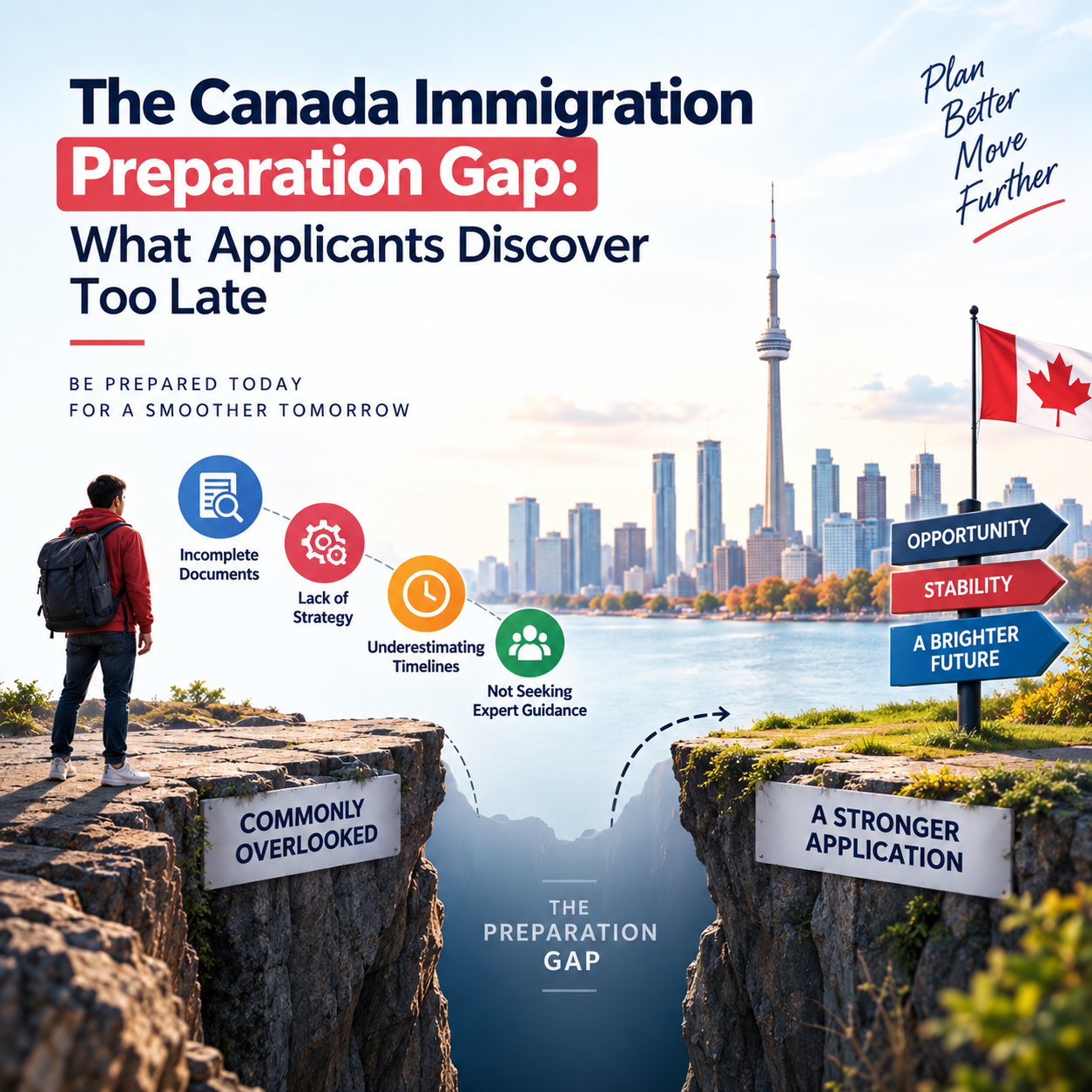
The Canada immigration preparation gap usually becomes visible when applicants begin preparing too late. What initially appears to be a simple application can involve language testing, education assessment, employment verification, financial evidence, police certificates, provincial requirements, and detailed consistency checks.
If you are researching a Canada Immigration Consultant in Nabha, begin by understanding your own profile and the current requirements before choosing a pathway.
Review your eligibility, language ability, education, work experience, finances, documents, and potential provincial options. Keep information accurate and updated, and never assume that another person’s immigration experience will produce the same result for you.
Most importantly, use current official information when making important decisions.