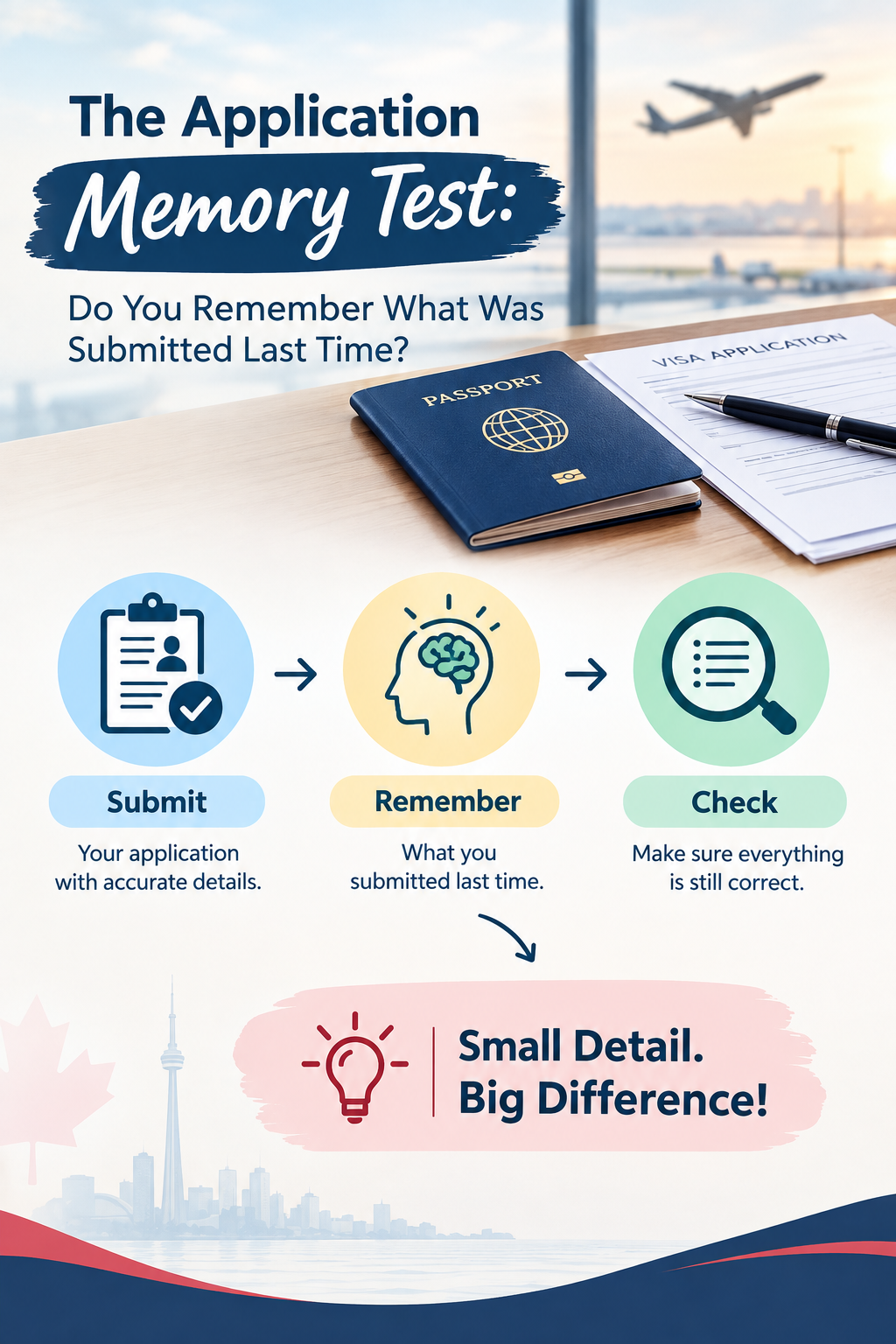
The Application Memory Test: Do You Remember What Was Submitted Last Time?
By seo_expert
September 29, 2026
Immigration applications are not simply about completing a form and moving on. When someone applies again, details from a previous submission can become an important reference point. Changes in employment, travel history, address, family information, or travel purpose can create questions if the earlier submission is forgotten. For people preparing a new application, working with experienced immigration consultants in Sangrur can help organize previous records and identify information that needs careful review.
Why Your Previous Application Still Matters
A common mistake is assuming every new application starts with a completely blank history. Applicants may need to provide information about education, employment, travel, family circumstances, and earlier applications. Even when circumstances have genuinely changed, forgetting what was stated previously can make it difficult to explain the difference clearly.
For U.S. nonimmigrant visa applicants, the Department of State allows information from a previously submitted DS-160 to populate some fields in a new application. However, applicants must check that carried-forward information is current and accurate. The DS-160 should not simply be copied without review.
The Memory Gap Can Happen Easily
People often remember major events but forget smaller details, such as employment dates, addresses, travel dates, or wording used to describe plans.
A person may have changed jobs, completed a course, moved, married, started a business, travelled abroad, or changed an itinerary. The new application may therefore contain legitimate differences.
The important issue is explaining genuine changes accurately and consistently.
Build a Previous-Application File
Before starting a new application, create a record of what was submitted last time. Keep copies of application confirmations, forms, supporting documents, passport pages, appointment information, and relevant correspondence where available.
A visa documentation checklist can include:
- Previous application or confirmation details
- Passport and travel history
- Education and employment information
- Addresses and contact details
- Family information
- Previous visa outcomes
- Documents submitted earlier
- Major changes since the previous submission
This turns memory into documentation and lets you compare earlier records with present circumstances.
Do Not Treat Reusing Information as Automatic
Reusing previous information can save time, but it should never replace verification. The Department of State says applicants can retrieve a previous DS-160 and create a new application using information from it. It specifically advises applicants to make sure previously submitted information is current and accurate.
A previous answer can be a useful reference, but it may no longer describe your situation.
An old employer may no longer be your current employer. An old address may have changed. A travel plan may have been cancelled. A family circumstance may have changed. Review each carried-forward detail rather than assuming yesterday’s information belongs in today’s application.
When Life Changes Before the New Application
Life rarely stays frozen between applications. Changes can happen in ordinary ways:
- A student graduates and starts working.
- An employee changes companies or responsibilities.
- A family welcomes a new member.
- A person moves to another address.
- A traveller visits additional countries.
- A planned trip changes dates or purpose.
- A passport is renewed.
- Professional or financial circumstances change.
What matters is that the current application accurately represents the applicant’s circumstances and that significant differences can be explained truthfully.
Create a Change Log
One practical method is to prepare a short “change log” before completing the new form. Divide a page into two columns: “previous application” and “current situation.”
Compare important categories such as employment, education, residence, travel, family, passport details, and travel purpose. Mark each item as “same,” “changed,” or “needs verification.”
This can reveal details memory overlooks and identify questions requiring supporting records.
Pay Special Attention to Dates
Dates deserve careful review because they can be surprisingly difficult to remember. Employment start dates, graduation dates, previous travel dates, residence periods, and passport information may appear in different documents.
If you are uncertain, do not guess simply because a form requires an answer. Review reliable records such as employment documents, academic records, old passports, travel bookings, or previous application copies where appropriate.
The goal is to provide information based on reliable records.
Consistency Does Not Mean Repeating an Outdated Story
Applicants sometimes believe every answer must match an earlier application word for word. That can create another problem: forcing outdated information into a current application.
Consistency should mean that the information is truthful and logically explainable, not that nothing can ever change. If your circumstances have changed, the current application should reflect those changes.
Unexplained contradictions can create confusion, so keep a clear record of what changed and when.
Why Applications Should Be Reviewed Before Submission
The U.S. Department of State emphasizes that DS-160 answers should be accurate and complete. It also states that applicants electronically certify their answers as true and correct to the best of their knowledge and belief. False or misleading statements can cause serious immigration issues.
That is why a final visa application review should be more than a spelling check. Read the application as an independent reviewer would, checking whether dates, addresses, employment, travel details, and purpose make sense together.
For applicants preparing documentation with immigration consultants in Sangrur, this review can also be an opportunity to organize questions before submission rather than discovering discrepancies later.
Keep Evidence of Major Changes
If your life has changed since the earlier application, maintain documents that can establish the change when relevant. Employment records can help confirm a job change, while educational documents may clarify a new qualification. Updated passports, travel records, or other official documents can similarly help establish current facts.
This does not mean submitting unnecessary paperwork; keep relevant records available so answers are evidence-based.
Prepare for Questions About the Past
A new application does not erase the previous application from your history. If asked about an earlier submission, answer honestly and explain genuine changes clearly.
You do not need to memorize every sentence, but you should understand the major facts previously reported and what has changed.
A simple timeline can connect previous information with the present situation and reduce preparation stress.
Use the Current Form as a Fresh Accuracy Check
Think of the new application as a fresh snapshot of your circumstances, not a duplicate of the old one. Start with previous records, compare them with current information, verify changes, and review the form.
For U.S. visa applications, the Department of State notes that the confirmation page with the application ID is required for the interview, while the entire DS-160 does not normally need to be printed and carried.
The Final Memory Test
The real “application memory test” is not about remembering every old answer perfectly. It is about knowing what was submitted, recognizing what has changed, and making sure the new application reflects the truth today.
Before submitting, ask five questions: What did I state last time? What has changed? Can I verify the changed details? Are my dates and history consistent with my records? Can I explain the differences honestly?
A careful comparison can prevent avoidable confusion and help create a clearer application history. For applicants seeking structured preparation, immigration consultants in Sangrur may assist with organizing records and reviewing information, but every applicant remains responsible for ensuring that the information submitted is complete and truthful.